Elevate Your Appliances with Unparalleled Design, Engineer & Build Innovation
Elevate your business with unparalleled innovation and stay ahead of the competition in today's fast-paced market.
3 min read
Kasey Cookwell
:
Updated on March 24, 2026
Commercial kitchens are evolving fast. Labor shortages, rising wages, and increasing menu complexity are forcing operators to rethink how work gets done—and what they expect from their equipment.
At the same time, the global commercial kitchen equipment market is growing rapidly, projected to reach $149B by 2030. Within that growth, one trend stands out:
Touchscreen controls are becoming a standard expectation—not a premium feature.
Industry data shows:
For OEMs, this shift is not theoretical—it’s already shaping specs, bids, and competitive positioning.
The biggest driver behind touchscreen adoption is simple: labor constraints.
Touchscreen-enabled equipment directly addresses these pressures. Case studies show:
Operators are prioritizing equipment that reduces training, guides execution, and ensures consistency—all core strengths of touchscreen interfaces.
Adding a touchscreen alone isn’t enough. Industry trade coverage shows that operators now expect specific outcomes from modern control interfaces:
Faster Training
Icon-driven, guided interfaces allow staff to operate equipment with minimal onboarding.
Consistent Results
Programmable recipes and multi-stage cooking ensure repeatable output across shifts and locations.
Fewer Errors
Visual prompts and automation reduce operator mistakes and improve food safety compliance.
Intuitive Interaction
Swipe, tap, and image-based navigation—similar to smartphones—are increasingly expected.
Built-in Service Tools
Diagnostics, updates, and data logging are becoming part of the control interface itself.
Touchscreens are valued because they improve operations—
not just because they look modern.
For appliance manufacturers, touchscreen platforms deliver advantages across the entire product lifecycle.
A single touchscreen interface can replace multiple components—timers, controllers, and displays—while enabling:
This expands what equipment can do without increasing system complexity.
Simpler interfaces lead to:
In a labor-constrained market, usability is directly tied to customer value.
As performance metrics converge, the user interface is becoming a key differentiator.
OEMs are competing on:
Touchscreens create differentiation both at purchase and over time through software and updates.
A configurable touchscreen platform can:
This leads to lower labor costs and reduced SKU complexity across product lines.
Touchscreen systems support:
For OEMs, that means lower warranty costs and improved customer satisfaction.
Connected touchscreen platforms enable:
Industry data shows predictive maintenance can reduce downtime by up to 30%.
Touchscreens transform equipment from a one-time sale into a long-term value platform.
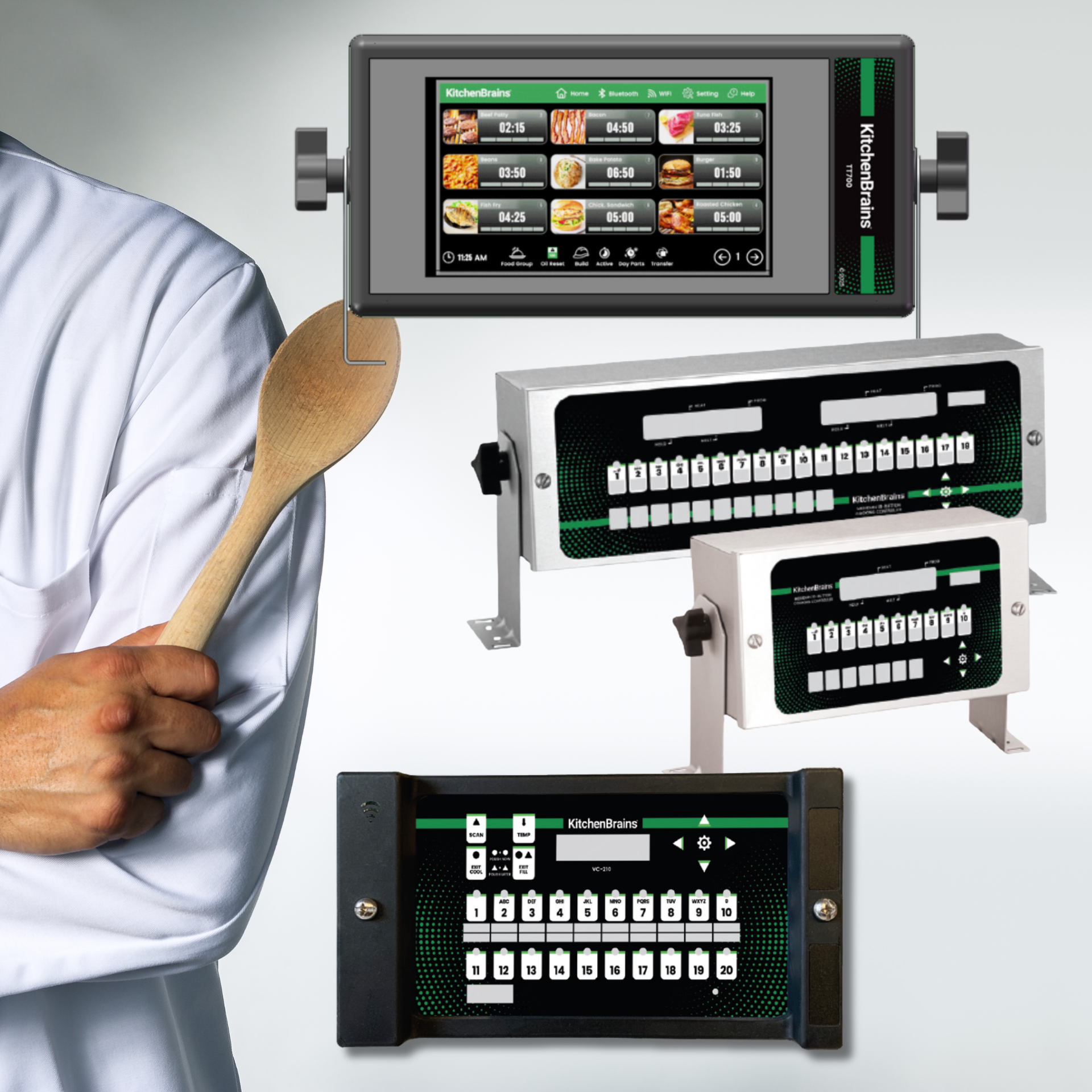
The Vision Touch Control (VTC) Series is designed specifically for commercial kitchen OEMs—delivering the capabilities operators expect, and the efficiencies manufacturers need. Click Here: Learn More About VTC Touchscreen Controls
A commercial smoker OEM adopting VTC achieved:
This demonstrates measurable OEM impact—not just theoretical benefit.
The market signals are clear:
For OEMs, the opportunity is equally clear: Touchscreen controls deliver advantages in capability, cost, serviceability, and differentiation—all within a single platform.
The Kitchen Brains VTC Series is built to help OEMs capitalize on that shift—today and into the next generation of commercial kitchen equipment.
Elevate your business with unparalleled innovation and stay ahead of the competition in today's fast-paced market.
Smart Solutions for Refrigeration Efficiency, Safety, and Sustainability Revolutionizing the Industry: Smart Refrigeration Trends
In today's fast-paced world, hungry customers crave fresh, high-quality food at quick-service restaurants (QSRs). Delivering on that promise requires...